






Read More...
Abstract:
This workshop focuses on contemporary concepts and clinical techniques in pediatric endodontics and restorative rehabilitation of primary teeth. The program will cover diagnosis and treatment planning for vital and non-vital pulp therapy, including pulpotomy, pulpectomy, irrigation protocols, obturation techniques, and the use of modern biomaterials. Participants will gain practical insights into the selection and placement of pediatric crowns, including stainless steel crowns and esthetic full-coverage restorations. Emphasis will be placed on evidence-based clinical protocols, case selection, and long-term success in pediatric patients. The workshop aims to enhance clinical confidence and provide hands-on exposure to modern pediatric dental treatment approaches.
Introduction:
Pediatric endodontics plays a vital role in preserving primary teeth, maintaining arch integrity, and ensuring the overall oral health of children. With advancements in materials, techniques, and restorative options, clinicians today can provide predictable and esthetic outcomes even in extensively damaged primary teeth. This workshop is designed to provide participants with a comprehensive understanding of vital and non-vital pulp therapy in pediatric patients, along with modern full-coverage restorative solutions. The program will focus on clinical decision-making, treatment protocols, and hands-on techniques involving stainless steel crowns and esthetic pediatric crowns, enabling practitioners to confidently manage pediatric restorative and endodontic challenges in daily clinical practice.
Learning Objectives:
- Understand the diagnosis, case selection, and treatment planning for vital and non-vital pulp therapy in primary teeth.
- Learn contemporary clinical protocols for pulpotomy and pulpectomy procedures in pediatric patients.
- Gain knowledge of modern biomaterials, instrumentation, and obturation techniques used in pediatric patients.
- Develop practical skills in the selection, adaptation, and placement of stainless steel and esthetic pediatric crowns.
- Enhance clinical confidence in managing restorative and endodontic challenges to achieve long-term functional and esthetic outcomes in children.
Who should attend:
- GP Dentists with special interests in the topic
- Specialists Dentists with special interests in the topic
Course Outline:
14:00 – 15:00 Lecture: Pulp pathology and diagnosis using various tools and pulp therapy techniques like pulp capping, pulpotomy and pulpectomy using different dental material.
15:00 – 16:00 Lecture: Pediatric crowns case selection and technique including Halls technique, zirconia crowns and flexible crowns.
16:00 – 17:00 Hands-on: MTA pulpotomy, MTA apexification
17:00 – 18:00 Hands-on: Stainless steel crowns
Demonstration and Workshop:
- Provided Materials and Equipment (for each participant):
- Jaw set, micro motor, low speed handpiece, Burs
- MTA, rotary files, obturation paste
- SSC. Flexible crowns & Zirconia crown
- 3D printed tooth with pulp
- 3D printed cast with soft gingiva
- Procedure and Demonstration Steps:
- Halls technique
- Flexible and zirconia crowns placement in anterior and posterior teeth
- MTA pulpotomy, MTA apexification
- Materials to be brought by participant (if required):
- Endomotors
About the Speaker:
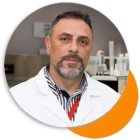
Dr. Anas AlSalami, Chair - Department of Orthodontics and Pediatric Dentistry
He is currently a Program Director and Assistant Professor for the Master of Science and Residency Programs in Pediatric Dentistry at Hamdan Bin Mohammed College of Dental Medicine, MBRU. He is a member of both The Royal College of Surgeons of Edinburgh, UK, and Ireland. Dr. Al Salami completed his Ph.D. in Dental Public Health and Health Economics at Queen’s University Belfast, UK, and has been committed to advancing academia and research since obtaining his Doctor of Dental Surgery (D.D.S.) degree. His scholarly work includes over 30 publications in renowned international journals. In 2017, he published his first book, Oral Health of Children of Incarcerated Mothers at UAE Jail Nurseries and contributed a chapter on “Children’s Oral Health in UAE” to the Comprehensive Textbook of UAE Healthcare.
Beyond his academic responsibilities, Dr. Al Salami serves as a Consultant Pediatric Dentist and Clinical Supervisor at both Dubai Health Dental Hospital and Al Jalila Children’s Specialty Hospital, a role he has held since 2018. He has also volunteered as a pediatric dentist with the UAE Red Crescent Medical Center since 2015, reflecting his strong commitment to community service. His exceptional contributions to the field of pediatric dentistry have been recognized through several prestigious awards, including the IADR Hutton Award and the DHCC Excellence Award, both presented in 2018.
Dr. Al Salami actively contributes to the development of pediatric dentistry in the UAE, serving as a member of the Scientific and Examination Committees for the Emirati Board in Pediatric Dentistry and the Dental Internship Programs under the National Institute of Health Specialties (NIHS). Additionally, he is a Board member of the Emirates Pediatric Dentistry Club and the International Association for Dental Research (IADR)-UAE Section.
Made Possible by

Read More...
Abstract:
This workshop explores advanced strategies for achieving durable, predictable adhesive interfaces in restorative dentistry. Participants will refine bonding techniques using universal and multi-step adhesives, with a focus on optimising resin–dentine adhesion. Key topics include simplified multi-step approaches, chlorhexidine application to enhance bond stability, and the use of bioactive restorative systems. Special emphasis is placed on managing deep dentine, reducing interfacial gaps, and improving longevity. Practical guidance will be provided on composites, glass ionomer-based and bulk-fill materials, silver diamine fluoride and effective polymerisation protocols, integrating evidence-based concepts with clinical techniques to enhance restoration performance and biological integration.
Introduction:
This course provides clinicians with an advanced yet practical approach to achieving durable and predictable adhesion in restorative dentistry. As adhesive failures remain a primary cause of restoration replacement, understanding how to optimise the resin–tooth interface is essential for improving long-term clinical outcomes. This workshop bridges current scientific evidence with everyday clinical practice, offering participants clear strategies to enhance bond strength, reduce degradation, and promote biological integration. Participants will explore the behaviour of enamel and dentine substrates, with particular attention to the challenges of bonding to deep dentine. The course highlights the effective use of modern adhesive systems, including universal and multi-step approaches, while introducing innovative strategies such as simplified multi-layer bonding and matrix preservation techniques. In addition, the role of bioactive restorative materials and adjunctive treatments will be examined, providing new perspectives on achieving more stable and functional restorations. Through a combination of theory and practical insights, this course aims to equip clinicians with the knowledge and skills necessary to improve the longevity of restorations, optimise clinical protocols, and deliver more predictable, patient-centred outcomes.
Learning Objectives:
- Understand enamel prism orientation and its impact on predictable resin bonding to etched enamel surfaces.
- Differentiate between various etching and bonding strategies (selective etching, self-etching, universal adhesives) and apply them purposefully in clinical practice.
- Implement advanced techniques to enhance resin-dentine interface longevity, including multi-step bonding, chlorhexidine application, and bioactive restorative systems.
- Apply evidenced-based protocol to minimize gap formation and postoperative hypersensitivity, using appropriate restorative ion-releasing bulk-fill materials.
- Understand and optimize polymerization protocols for adhesive and restorative materials, including selecting appropriate curing parameters (light intensity, wavelength, and exposure time) and techniques to ensure an adequate degree of conversion while minimizing polymerization shrinkage stress and interfacial gap formation.
Who should attend:
- GP Dentists with special interests in the topic
- Specialists Dentists with special interests in the topic
- Dental Students
- Residents/Interns
Course Outline:
09:00 – 10:00 Lecture: Fundamental Principles of Adhesion in Dentistry
This session will provide a comprehensive scientific foundation for adhesive dentistry, focusing on the interaction between dental substrates and modern adhesive systems.
10:00 – 11:00 Lecture: Advanced Strategies to Improve Bond Durability and Restoration Longevity.
This lecture will focus on evidence-based strategies to enhance the effectiveness of bonding and reduce degradation over time.
11:00 – 12:00 Hands-on: Adhesive Techniques and Substrate Management.
Participants will apply theoretical concepts using extracted teeth or simulation models.
12:00 – 13:00 Hands-on: Bioactive Restorations and Advanced Clinical Protocols.
This session focuses on restorative procedures. Emphasising gap reduction, materials selection, and clinical performance.
Demonstration and Workshop:
Steps/Outline, and the provided materials and equipment.
A.The hands-on workshop is designed to allow participants to apply advanced adhesive techniques in a controlled clinical simulation environment. Attendees will perform selective enamel etching, self-etch bonding, and multi-step adhesive protocols on standardised tooth specimens. Emphasis will be placed on understanding the interactions between adhesive systems and dental substrates, enabling participants to refine their technique to achieve consistent outcomes. Participants will practice placement of both conventional and bulk-fill resin composites, as well as glass ionomer-based and bulk-fill materials, focusing on proper adaptation, layering (when required), and polymerisation protocols. Guided exercises will address critical challenges such as managing deep dentine permeability, minimising postoperative sensitivity, and preventing marginal gap formation. The workshop will also include practical use of chlorhexidine and bioactive materials to enhance long-term bond durability. Faculty supervision will ensure individualised feedback, reinforce correct techniques, and troubleshoot common errors. By the end of the session, participants will have improved manual skills, greater confidence in material selection, and a deeper understanding of how to integrate evidence-based adhesive strategies into daily clinical practice for durable, biologically sound restorations.
- Provided Materials and Equipment (for each participant):
- Extracted or simulated teeth mounted in holders
- Adhesive systems (etch-and-rinse, self-etch, universal adhesives)
- Restorative materials (composites, bulk-fill, GIC, RMGIC, adhesives, conventional and flow composite)
- Light-curing unit with calibrated output
- Finishing and polishing instruments (discs, burs, strips)
- Silver Diamine fluoride
- Procedure and Demonstration Steps:
- Adequate Enamel Preparation: Enamel prisms orientation in various areas of the tooth is required for predictable resin bonding to etched enamel
- Substrate evaluation and selection of appropriate adhesive strategy
- Purposefully etching/bonding approaches:
-Enamel/dentine selective etching and primer-&-bond adhesives
-Enamel selective etching and self-priming or primer-&-bond adhesives
-Self-etching bonding in enamel/dentine with universal and multi-step adhesives
-Enamel/dentine selective etching with universal and multi-step self-etch adhesives
-Enamel selective etching with universal and multi-step self-etch adhesives - Strategems for long-lasting resin-dentine interfaces:
-Simultaneous simplified multi-step bonding technique
-Use of chlorhexidine with self-etch and etch-&-rinse adhesives
-Bioactive restorative systems - Silver Diamine Flouride –
- Deep dentine permeability and post-operative hypersensitivity
- Bioactive Restorations – reduction of gap formations:
- Conventional and bulk-fill composites
- GIC, RMGIC Restorative – when and how
- Polymerisation protocol and control of the O2-inhibited oxygen layer
- Materials to be brought by participant (if required):
- Glide path management
- Shaping
- Finishing
- Ledge management with manual files
- Ledge management with rotary files
- Materials to be brought by participant (if required):
- Personal magnification (loupes or operating glasses)
- Clinical hand instruments (if Preferred)
About the Speaker:
Prof. Dr. Salvatore Sauro, former president of the DMG-IADR group, is a Full Professor of Dental Biomaterials and Minimally Invasive Dentistry at Universidad CEU-Cardenal Herrera, Valencia and he lead the BIODENT-REG research group. He earned his PhD at King’s College London, where he continued as a postdoctoral researcher and research associate. With over 20 years of experience (H-index 49), he has published more than 210 per reviewed papers. His research focuses on minimally invasive dentistry and on the development of bioactive and biomimetic materials for tissue regeneration, scaffolds designed to promote remineralisation, pulp healing, and bone regeneration in advanced regenerative dentistry.
Made Possible by:


Read More...
Abstract:
Immediate implant placement in the anterior maxilla remains one of the most demanding and challenging procedures in implant dentistry. This workshop presents a structured, evidence-based protocol for predictable outcomes. It begins with rigorous case selection and evaluation of alveolar anatomy, then moves through prosthetically-driven guided implant positioning, and management of the peri-implant gap with hard and soft tissue biomaterials. It closes with immediate provisionalization and its role in preserving the emergence profile. Participants leave with a reproducible decision framework — knowing not only how to place, but when.
Introduction:
Few procedures in implant dentistry carry the margin for error of the anterior immediate implant. The socket is fresh, the buccal wall is thin and frequently compromised, and the patient — often presents with a failing but visible tooth — expects to leave with a fixed provisional the same day. Clinical expectations could not be higher.
For two decades, immediacy has evolved from an ambitious exception into a documented protocol. Yet the literature is clear that predictable outcomes depend on a small number of decisions taken in sequence: whether the site is a candidate at all, where the implant is positioned in three dimensions, how the osteotomy is prepared to achieve primary stability without violating the buccal plate, how the peri-implant gap and soft tissue phenotype are managed with biomaterials, and whether a provisional is placed to support the emergence profile.
This workshop expands on this sequence into a reproducible framework. Drawing on current evidence and the presenter's own clinical caseload, it treats immediacy as a discipline — a chain of values in which every step must justify itself to the patient. Participants will learn to read the anterior site with confidence, and to know when to place immediately, and when not to.
Learning Objectives:
- Evaluate the anatomical, biological, and prosthetic criteria that determine whether an anterior socket is a candidate for immediate implant placement and recognize the contraindications that call for an alternative approach.
- Interpret the anatomy of the buccal bone wall and apply prosthetically driven three-dimensional positioning to protect the facial plate and the emergence profile.
- Execute a controlled surgical drilling protocol, using guided surgery where indicated, to achieve the primary stability required for predictable immediate placement.
- Select and apply hard and soft tissue biomaterials to manage the peri-implant gap, augment the buccal contour, and reinforce the soft tissue phenotype.
- Apply immediate provisionalization to support and shape the peri-implant tissues and determine when immediate loading is appropriate and when it should be deferred.
Who should attend:
- GP Dentists with special interests in the topic
- Specialists Dentists with special interests in the topic
Course Outline:
09:00 – 10:00 Lecture: Indication, anatomy and drilling sequence
10:00 – 11:00 Lecture: Grafting and provisionalization
11:00 – 12:00 Hands-on: Place immediate implant
12:00 – 13:00 Hands-on: Perform hard/soft tissue grafting
Demonstration and Workshop:
Steps/Outline, and the provided materials and equipment.
- Provided Materials and Equipment (for each participant):
- Bone Models with extraction socket 11
- Microsurgical-tunneling kit, implant motor, burs and handpiece
- Bone Graft
- Acellular dermal matrix (ADM)
- Smartt healers, scanbody
- Procedure and Demonstration Steps:
- Implant placement into fresh extraction socket
- Tunneling procedure through Vestibular Incision Subperiosteal Tunnel Access
- Hard and/or soft tissue grafting through tunnel
- Materials to be brought by participant (if required):
- Loupes (Optional)
About the Speaker:
Dr. Alfonso Gil is a periodontist, implantologist, and prosthodontist trained in Spain, the United States and Switzerland. He holds specialist certifications from the American Board of Periodontology and the Swiss Society of Reconstructive Dentistry.
He earned his dental degree from the University of the Basque Country, completed his periodontal specialization and MSc at USC, surgical implant training at UCLA, a PhD at UIC Barcelona, and a Master in Reconstructive Dentistry at the University of Zurich.
He serves as Editor-in-Chief of the International Journal of Esthetic Dentistry and Associate Professor at USC and UIC.
He is an active member of the EAO, SEPES, and EAED with over 20 publications and one book.
He practices at Clinica Dental Albia and directs Advanced Esthetic Seminars in Bilbao
Made Possible by:


Read More...
Abstract:
Successful shaping must reconcile two biological priorities: preserving pericervical dentin and creating sufficient apical space for disinfection in necrotic canals with high bacterial loads. This course presents a strategy combining low-taper shaping, instruments with a maximum flute diameter below 0.8 mm, selective apical enlargement, and sequential NiTi thermal treatments. The sequence progresses from a more austenitic first instrument for penetration and cutting efficiency to increasingly martensitic larger instruments for flexibility and fatigue resistance. Participants will apply these principles in simulated narrow and curved canals, selecting apical size according to anatomy and infection while limiting unnecessary coronal dentin removal.
Introduction:
Modern endodontic shaping should not be defined by a single preparation size or taper. It should be biologically driven and adapted to anatomy, microbial status and restorative prognosis. In vital cases, conservative preparation may be sufficient; in necrotic teeth, apical periodontitis or situations with a high bacterial load, greater apical enlargement can improve irrigant penetration and microbial reduction. This biological objective must be achieved without excessive removal of pericervical dentin, a region that contributes to long-term tooth strength. The proposed strategy combines a slim coronal profile, a maximum flute diameter (MFD) below 0.8 mm, and selective 3% tapered apical shaping. It also uses sequential thermal behaviour, progressing from more austenitic to more martensitic instruments to balance cutting efficiency, flexibility, and cyclic-fatigue resistance. The course translates metallurgy, anatomy and infection status into a reproducible clinical sequence.
Learning Objectives:
- Differentiate shaping requirements for vital, necrotic and high-bacterial-load cases using clinical and anatomical criteria.
- Select an apical preparation size that supports disinfection while limiting unnecessary coronal enlargement.
- Compare the clinical behaviour of gold, pink and blue Niti thermal standards across a sequential shaping protocol.
- Execute a low-taper shaping sequence while maintaining an MFD below 0.8 mm in the pericervical region.
- Prepare simulated narrow and curved canals with selective 3% tapered apical enlargement while preserving the original canal trajectory.
Who should attend:
- GP Dentists with special interests in the topic
- Specialists Dentists with special interests in the topic
- Dental Students with supervised preclinical experience
- Residents/Interns
Course Outline:
14:00 – 15:00 Hrs Lecture: Biological objectives of shaping; pericervical dentin preservation; diagnosis of necrosis and high bacterial load; evidence for selective apical enlargement; and the MFD <0.8 mm concept.
15:00 – 16:00 Hrs Lecture: NiTi phase transformation and clinical behaviour; sequential thermal standards (gold, more austenitic; pink; blue, more martensitic); instrument selection, safety, and case-based apical sizing
16:00 – 17:00 Hrs Hands-on: Establishing glide path and working length, then minimally invasive shaping of narrow and curved simulated canals with a slim, low-taper sequence. Assessment of canal trajectory and pericervical preservation
17:00 – 18:00 Hrs Hands-on: Selective apical enlargement with 3% tapered Apical Shapers (sizes 30, 35, 40 and 50), irrigation strategy, case-based decision-making, troubleshooting, and final evaluation
Demonstration and Workshop:
Steps/Outline, and the provided materials and equipment.
- Provided Materials and Equipment (for each participant):
- Training station is shared by no more than two participants; endodontic motor and contra-angle.
- Standardised Transparent resin replicas of narrow and curved canals.
- Slim shaping sequence instruments with (gold, more austentic; pink; blue, more martensitic); thermal standards.
- 3% tapered Apical Shapers in sizes 30, 35, 40 and 50; glide-path files; hand files; ruler, stops and gauge.
- Irrigation syringes, side-vented needles, lubricant, absorbent points, training tray and eye protection. No compressor is required.
- Procedure and Demonstration Steps:
- The instructor will first demonstrate case assessment, working-length determination and selection of the initial apical target according to anatomy, pulpal status and bacterial load. Participants will negotiate a reproducible glide path and use the slim shaping sequence with light apical pressure, frequent cleaning and irrigation, following the recommended speed and torque parameters. The sequence will illustrate the clinical behaviour of gold, pink and blue NiTi thermal standards. After basic shaping, participants will inspect the transparent model, verify preservation of canal trajectory and confirm that the instrument design limits pericervical engagement through an MFD below 0.8 mm. They will then select and use 3% tapered Apical Shapers (30, 35, 40 or 50) to enlarge the apical third without increasing coronal taper. A second model will be used for a necrotic/high-bacterial-load scenario, integrating apical sizing with an irrigation and activation sequence. The session concludes with comparison of preparations, management of procedural difficulties and a case-based checklist for clinical transfer.
- Materials to be brought by participants (if required):
- No materials are required. Participants may bring their own magnification loupes if preferred.
About the Speaker:
Dr. José Aranguren is Head of Endodontics at Rey Juan Carlos University in Madrid and President of the Spanish Association of Endodontics (AEDE). He maintains an exclusive private practice limited to Endodontics in Spain and Austria and lectures internationally on modern endodontic concepts, minimally invasive shaping and advanced irrigation strategies.
He has published more than 40 scientific articles and is actively involved in postgraduate education, clinical research and the development of contemporary endodontic technologies. Dr. Aranguren is internationally recognized for his work on modern shaping philosophies, NiTi metallurgy and biologically driven endodontic treatment concepts
Made Possible by: